How Long Does It Take to Change? Why Personal Growth Takes TIME
How Long Does It Take to Change? Why Personal Growth Takes TIME
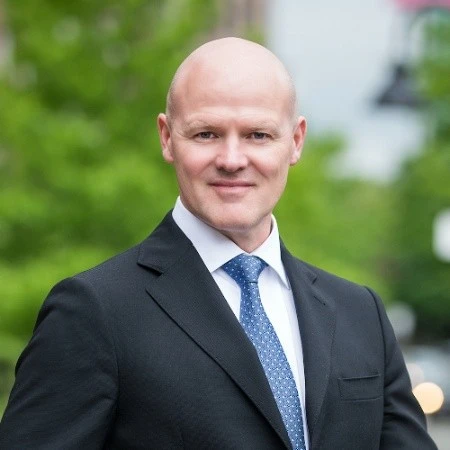
Hi, I’m Paul Krismer, and this week’s video is all about the path of personal growth. Of course, we want it always to be really quick and efficient, and the goals that we have, we just want to get there, darn it! But personal growth isn’t hard and it isn’t fast. It’s slow and easy. When you think about it, you know, you think of who’s efficient and good at learning math. Well, those people that get it right away, oh, they’re good at math. But lots of people take their time learning certain things, and then once they have it, they have it. It’s there for life. In fact, there’s some evidence that if we cram before an exam and learn something really quickly, we don’t retain the knowledge. Or, even think of our perceptions about somebody with slow and halting speech. We might question their intellect a little bit, and go, “What is this?” And yet, the careful listener might find that there’s a depth of understanding and a profound wisdom in somebody who may be speaking with a slow and halting manner. That is the way that we need to approach our own sense of personal growth. It’s not stereotypical. It’s not the person who gets it right away or has huge progress right away that matters. Instead, today, I’m going to talk about the ways that we can get personal growth with the genuine science and facts behind what gets us there. So, stay tuned.
As a coach, public speaker, and best-selling author, I teach topics just like this one all around the world. So stay tuned, and I’ll give you practical tools that you can use to make both yourself and those around you both happier and more successful. Yeah, so this week’s video is all about personal growth and how to get there. If you like this kind of content, click the like button, subscribe to my channel, and I love it when people comment, Maria that includes you, because it’s enriching. Actually, the content that I bring, I don’t know it all by any means, and the comments make it a better discussion for all of us. Look, we often feel defeated. We feel like we’ve got the sense of failure, that there’s just, we’re inadequate somehow in our journey towards personal growth when it isn’t fast. When we don’t see clear demarcations of clear milestones that we’re moving along and getting. And then we feel like, “Oh, well why would I continue when we quit, and we stumble, and we get this sense that we’re not making the progress we want?” Well, here’s the deal. Lots of good research on the way that people grow and learn demonstrates that it’s not about speed at all. The first thing I think I want to say on that front is that the brain is always changing, literally physically changing. And I’ve referenced neuroplasticity in the past, but it’s this idea that when we want a new behavior to become part of our lives, we literally have to lay down new neural pathways in our brains. And this doesn’t happen overnight. It happens reasonably quickly, you start to be able to see it on instruments, MRIs. You can measure change in a matter of a few weeks, but it’s weeks, not days, it’s not hours. So, if you really want meaningful change in your life, you have to persist for a while, and allow the brain to grow and change. Another thing I really want to point out that’s just so obvious when you consider it: collaboration. Working with other people is so clearly a path to personal growth that we often avoid. We take on these challenges to become fit, or grow spiritually, or whatever our thing is that we want. We want it to happen through our individual effort. And yet, what’s beautiful about collaboration is that it demonstrates a process. That when you’re working with other people, you have to be deliberate about, “We’re doing this, and we’re doing that, and then we’re doing this.” And that’s why the simple group work that people do, whether it’s in therapy or going to the gym, or learning a spiritual practice like meditation, or losing weight, all those things when you’re doing it with other people, the process associated with the change that you want becomes much more intentional. It’s something that you actually talk about with other people, and therefore it becomes clearer that your own personal goals come through a process as well. It’s not instant. Thirdly, I want to make clear this: there’s tons of research. Carol Dweck is the best researcher on this, on this idea that learning is mistake-driven. And consider for a moment, an infant that’s learning to walk. They do not stand up one day and then progress across the room as though it was just a natural thing, even though we all think of walking as a natural human trait. But to get there, an infant had to fall over and over and over again. That was the learning process. And there’s bumps and bruises, and setbacks, and some days, “I’m just going to crawl because I don’t want to walk again.” But we all make that progress through mistakes. Learning is a mistake-driven process. And there’s something called a fixed mindset, where we think we’re either good at something or bad at something, and that’s just the way it is, it’s fixed. I can’t change it. And of course, that is almost never true. It’s always a function of consistency and effort. So, the growth mindset says to stick with something, and you will get to where you want to get to. Got it? Growth mindset is about consistency and effort, not that I’m good or bad at something by nature. And then, finally, I wanted to mention this: never aim for speed. It’s a fool’s errand to say, “You know, I’m going to lose 10 pounds this week.” Obviously, that would be outrageous. It wouldn’t be healthy. You might be able to do it, but it wouldn’t be healthy, and you’ll probably bounce right back to your 10 pounds heavier afterwards. So, when you think of something like losing weight, just as an example for personal growth, the thing to be mindful of is that it’s consistency and variety. It’s this ability to be flexible in your mindset about how you’re going to achieve your goal. Because if you just thought, “Well, I’m going to eat grapefruit this week, nothing but, and then I’m going to lose 10 pounds, and yay, I’ve made it to where I wanted to get to,” it’s probably not sustainable. And it’s not going to, those kinds of approaches don’t work. Whereas if I said, “Gee, I want to lose weight. I want to lose 10 pounds, and I see my goal is 3 months from now, and I’m going to approach it through this new workout regime that I’ve been reading about, and that’s going to be my approach. And I’m going to actually try a different diet, not counting calories, but maybe I’m going to go to a plant-based diet that’s high in fiber, lower calories generally, plant-based foods. And I’m not even going to count calories. That’s going to be my approach.
And, I’m going to read broadly, good scientific studies of good weight loss techniques. And then, finally, I’m going to join a group that’s doing a certain workout or on a late weight loss program with me. I have these variety of tools all simultaneously being implemented. What that gives is not only a kind of rounded approach to the problem you’re trying to solve, but it creates a depth. It’s the mental flexibility that says, “Oh, this isn’t one way I win or lose, I fail or succeed.” Instead, it says, “This is a process of learning, adapting, and becoming consistent in my effort for a long-term goal that’s worthy of pursuing.”
With those kinds of tools I’ve talked about today, we get the personal growth that we want. I just want to finish the video on this one thought. All the stuff I’ve talked about in terms of personal growth equally applies in group settings. Whether you’re talking about the progress that you want to make as a family, you want to talk about the work that you want to do, these things are all true. It’s mistake-driven, it’s about consistency and effort, it’s not about speed, and it’s largely about allowing the time for growth to become natural for that neuroplasticity to take hold in a collective or an individual.
Hey, if you like this kind of content, click the like button, subscribe to my channel. We’ll see you next week. Thanks for watching, bye for now.