kigai — What is Ikigai?
kigai — What is Ikigai?
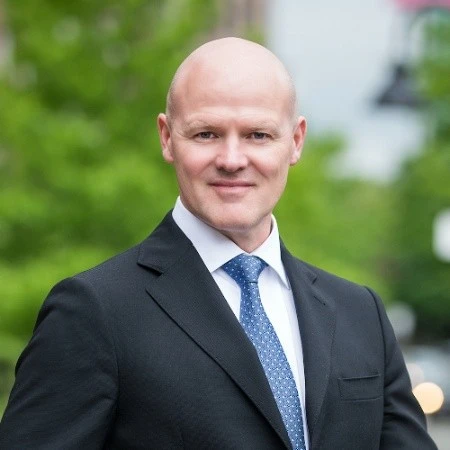
Hi, it’s Paul Krismer. I’m your happiness expert and this week, I want to talk all about a concept in Japanese that’s called Ikigai. Ikigai is this idea of having great purpose in life, having joy in your day-to-day activity. It’s really about the reason to be alive. I just read this really great book by Garcia and Morales, called Ikigai, and it’s all about the art of Japanese living – living long and living joyfully. It’s really this kind of beautiful, very sweet concept. The authors of the book focus on the island of Okinawa and the reason why they do this is because the people there are the oldest humans on earth. There’s a greater proportion of people over 100 years old there than relative to any other place on earth.
Sometimes, when we think of very old people, we think of disability and life that’s very simple, and maybe we imagine care homes and things that aren’t so great. But, the reality there is that the old people in Okinawa are very active. They’re out socializing, they do karaoke, they busy in their vegetable gardens, and it’s these activities that are giving them their long life. So, the insight into Ikigai about how we live our best life maybe has some teachings for us as well, so stay tuned.
As a coach, public speaker, and best-selling author, I teach topics just like this one all around the world. So, stay tuned and I’ll give you practical tools that you can use to make both yourself and those around you both happier and more successful. So, what is Ikigai? It’s this idea that we have this reason for living, this beauty of day-to-day joyful activity, this purpose for why we get up out of bed in the morning. I’ve done videos on this subject in the past that came from a more western perspective, and I think this eastern perspective has something to share with us. It’s not about just our social needs, which are both the biological and social needs very important for our well-being, but there’s something deeper, maybe something soulful or spiritual about this concept of Ikigai.
It is this notion that almost kind of Zen Buddhist that we need to be in the moment with the stuff that’s important, that we’re living with this sense of inner peace and direction to our lives. There’s this process immersion where it’s not about the outcome to accomplish or acquire something, but rather, how do we get from A to B, and can we be so immersed in the process that in and of itself it’s deeply satisfying? And again, I’ve done videos on the concept of flow and I think this is kind of related. Flow is this idea that we are so immersed in a particular challenge or activity that nothing else really matters, our focus is a hundred percent on this task, and that it’s sufficiently engaging that it’s requiring us to live with great skill sets or bring our best skills to the particular challenge, and that’s kind of when we get into this sense of flow where everything else fades away, and now we’re just in this moment.
Ikigai takes that even further and says that not only is the activity that engaging, but the activity deeply aligns with our values and is highly meaningful. And, I think there’s a western perversion to that viewpoint. It’s that we focus so much on money and work that if our purpose in life should be about acquiring and accomplishing, and maybe that our jobs need to be giving us a great sense of purpose and meaning, and that isn’t always going to be the case. It’s ideal, obviously, if that is the case, but it’s not always going to be like that. So, I’ve got a few tips for you for looking at getting more Ikigai, purpose, meaning in life for you.
The first one is maybe on that same theme of western perversion, is don’t see it as so huge. It doesn’t have to be overwhelming. It can be very simple things. You know, for a lot of these old people in Okinawa, it was their vegetable garden that gave them purpose. They get up in the morning, they have a little bit of tea and maybe a few bites to eat, and then they get into their garden. It’s complete immersion. It’s the process, it’s the beauty, it’s the completeness of their activity in the garden that gives them great pleasure and purpose. And, it’s daily. It’s this ritualistic aspect of a container in their life that gives them tremendous meaning.
You know, it might be raising your kids, or it might be a beautiful hobby. I’ve got a dear son of mine who loves to ride his motorcycle, and I know that it’s Ikigai in nature. It’s deeply engaging for them, it gives them the sense of beauty out in nature, the power under his hands, and I mean I’d sooner he didn’t have a hobby of riding a dangerous motorcycle, but for him, it’s this passionate commitment to an activity that’s deeply purposeful, and pleasurable, and almost spiritual in nature. Does that make sense? Any hobby, anything like that can be it. And obviously, if it’s your work, if it’s the thing you go to work nine to five every day to do, it is a huge bonus if you have Ikigai found in that activity.
You know, I’m lucky enough to say that trying to make the world a little bit happier is something that I would do for free. Now, I don’t do it for free typically, because I need to put food on the table, but I love the work that I do, and it gives me Ikigai. But, it doesn’t have to be your profession. I also want you to think of just the typical aspects of flow. It’s about where we’re finding that the challenge is just enough to push our skill set, where we can be fully immersed in the task, we’re not distracted by trying to multitask or have too many other inputs coming in. I have birds calling in this house that I’m in right now, I’m visiting a friend in Victoria, not in Las Vegas and Flo also has this idea that we are fully occupied with an activity for a period of time and so flow doesn’t usually happen in seconds, it happens over tens and twenties and thirty minutes and hours at a time. Then we disengage from our flow activity and at the end of it, we go, ‘That was so fun.’ But most of the time when we’re in the flow activity, we’re hardly aware that we’re doing it. Think sports and it’s often people can be in a flow activity when they’re playing a sport. But you can also get it from just a really great conversation with somebody where time just disappears and hours later, ‘Oh my goodness, you know we haven’t had dinner yet,’ or whatever. Then you go, ‘Okay, I know I’ve been in a flow activity.’
Keep in mind that your Ikigai can evolve over time. Maybe through your 20s, you’re passionate about motorcycle writing or whatever. In your 30s, it’s maybe when you’re having your children and you’re fully focused on that task. In 40s, it’s something different. Maybe you’re into acrylic painting at one point or maybe your career at some point becomes so satisfying that it becomes your Ikigai. But it doesn’t have to be a singular thing that you discover when you’re 19 and then have meaning for the rest of your life. Great if it does happen that way but it’s unlikely. It evolves over time.
Finally, I just want to give you this idea that Ikigai is simple things done very well. Simple things done very well like tending to our vegetable garden. Or think of the Japanese tradition of a tea ceremony where there’s all this ritual about the way the tea is prepared, the way the Matcha is whisked into the hot water, and then how it’s served. Even if you have ever met someone of a traditional Asian descent and the way they present a business card, very ritualistic, two hands holding the card up in the very top corner so that the whole information on the card can be presented without being covered by your fingers, and a deep bow as they give the card over. It’s a simple thing done very well. Gives us moments of craftsmanship in the way we present our business card. And craftsmanship is a good word for it. Maybe it’s the way we tend to our house, maybe it’s the way that we do our administrative work in our business. Which often, you know, for me, is a distraction. I don’t want to have to get to paying the bills and stuff like that, but if I can make it ritualistic, do it very well, a simple task, then maybe there’s an Ikigai in that type of activity.
I even think of craftsmanship and you know, I’ve got a brother and sister-in-law, Peter and Ann, who come with this gift of hospitality. That whenever you go to their place, there’s food, there’s comfort. They just make you feel so at home. And for them, maybe that’s a bit of Ikigai. That this idea that their craftsmanship is in the way that they play host to people. I hope this gives you some things to contemplate. That you know, our purpose in life doesn’t have to be huge. It has to be in the simple everyday stuff that we can love and find that it gives us purpose and meaning. And it’s a reason to get up in the morning, so that we can experience our Ikigai. If you like this kind of content, click the like button, share the video with family and friends. It expresses your desire for the world to be a happier place. And I thank you for sharing. Until next time.”