Finding Long Term Happiness – Three ways to uncover your happiness!
Finding Long Term Happiness – Three ways to uncover your happiness!
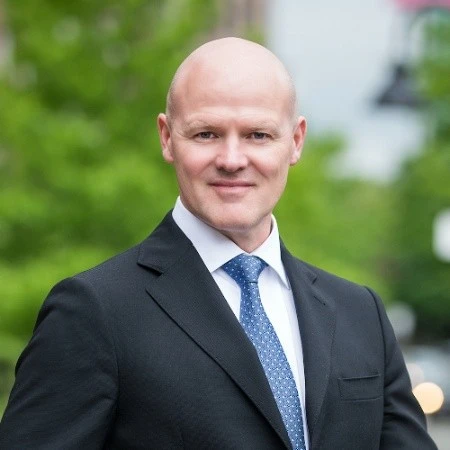
Hey, good morning. I’m Paul Krismer, I’m your happiness expert, and this week, I’m coming to you from Denver, Colorado. I promised last week that I was going to go through a series of basic teachings on the constructs in which positive psychologists determine what happiness really is all about. Last week, I talked about this three-legged stool where we needed pleasure, meaning, and something called psychological richness. So, if you haven’t seen that video, go back and watch it. It’s a perfectly valid model and useful for us to understand our own way of accessing happiness for ourselves. The benefit of these kinds of constructs is that they give us language and perspective so that we can pursue our own happy lives with some good foundational education as to how to go about doing that well. So, I talked about that last one last week. And this week, I want to share a different construct which I think is equally valid, just as helpful, but maybe context-providing for you, so that you can get a sense of how you might get more access to your own best self. So stay tuned.
As a coach, public speaker, and best-selling author, I teach topics just like this one all around the world. So stay tuned, and I’ll give you practical tools that you can use to make both yourself and those around you both happier and more successful. Yeah, so last week, I gave a model about the three-legged stool, these three elements of happiness that we can choose to exploit to make ourselves feel better and get all the advantages that feeling better have for us: more success in our lives, healthier, better relationships, better career, all that kind of stuff. Well, this week, I want to give a different way of looking in through a researcher’s point of view as to what really happiness is. And this model comes from a guy named Martin Seligman who I’ve talked about in the past. He’s one of the granddaddies from the positive psychology movement. In 1997, he began to write about this idea that there are three essential components to happiness and I’m going to explain them all briefly today.
The first one, which we’ve talked about in past meetings, is this simple idea of pleasure. And the way he defined that is, it’s all about sensory pleasures. It’s to eat good food and immediately have an explosion dopamine in our brains. Oh yeah, that’s good, I love the good food. Or touching something that feels wonderful, listening to beautiful music or the slow trickling sound of a little stream in the countryside, or smelling something delicious, walking into a house with fresh bread, and immediately it makes us feel good. We could be in an art museum, seeing something beautiful. We can look at a beautiful person of the opposite gender or a beautiful little child or just again out in nature and see something that looks wonderful. These sensory experiences all bring us pleasure, a very simple but very true and realistic way of accessing good feelings inside our bodies. The challenge with sensory pleasures is that they’re fleeting. We can only eat so much chocolate cheesecake before eventually that goes from being a wonderful pleasurable experience to actually making us feel a little sick in the stomach. And when we even think of sensory pleasures like sex, which is one of our greatest sensory pleasures, it’s got all this mix of sights, sounds, smells, everything going on, touching, just like those rich beautiful sensory experiences. But even that, at some point, you get worn out, tired and raw, and even sex will cease to be pleasurable at some point. So that’s the one limitation. It’s not to say it’s a bad way of getting happiness, but it’s limited. And also where these kinds of sensory pleasures are so available in our society, we could be prone to addictions, too many Lay’s potato chips, too much crack cocaine. Either way, those are bad ways to get pleasure on a regular basis. So, that’s access number one.
Access number two is this idea of engagement. Or in a different researcher’s terms, Mihaly Csikszentmihalyi. That’s his name, and he is the preeminent researcher on the state of flow or being in the zone. And that’s what engagement’s all about. It’s, we don’t realize in the moment that we’re happy, but when we’re doing something, athletics for example, if I’m playing hockey, I may be totally in the zone and in a really good mental state, but I don’t recognize it until I’m out of the activity. Because when I’m in the activity, I’m so focused and that’s one of the ways that we know we’re in a state of flow is if we’re deeply focused. We forget about other things in our lives, and we’re just enjoying the moment. And it doesn’t have to be athletics by any means, it could be a deep conversation, writing a report, reading a good book, pursuing some kind of hobby, being at a dance class, any kind of thing that gets you fully engaged and feels a little bit like you’re stretching your skill set can get you into a flow state. It’s a beautiful sustainable activity over many hours and ideally, if we’re in our working years of our lives, we have a career that has many opportunities through the day for us to get into flow states. And if we’re in a career that doesn’t lead to any flow states, that could be a difficult place to spend 30 or 40 years of your life.
The third construct, the third way of getting happiness in this model is similar to the one I shared last week, and that’s this idea of meaning. And in this particular model, they describe meaning a bit more simply, and that’s just this idea that we have purpose or direction in our lives that sustains us over many, many weeks, months, potentially decades. And so that’s mostly about living values, and I’ve given and maybe David will give a link in the description below, there’s an exercise on my website that is an excellent free exercise to determine your own values and prioritize them one through five, so you really know what it is that’s giving meaning in your life. And if you really genuinely have never done this and don’t know objectively what your values are, it may be pretty hard to feel like you’re living a meaningful life, because you just don’t know. You’re ignorant of what’s going to drive that for you forward in your life. But if you look at these three things, one of the things that I like about this model is, pleasure is immediate and short-term. Engagement or being in the zone is sustained over many, many minutes and potentially many hours of being richly in a state of flow. And meaning, by contrast, is sustained over weeks and months and years. And you can go a day without having something in your activity that’s related to meaning and still feel like you have a meaningful life. So, there’s this wonderful way that these all three of these tools to access happiness can be woven together to live a very happy life, and we can choose, we can consciously choose to align ourselves at different times of the day to be in these three areas of life where we can get more happiness. To be pursuing sensory pleasure, to be in ‘zone’ activities, to get in this data flow, and then to pursue something that gives us fundamental, foundational meaning over sustained periods. And if we design our lives that way, boy, there’s a pretty high likelihood you’re going to be happier than if you don’t design your life that way. Does that make sense? I hope you like this kind of content. It’s here for you, for free. I would love it if you share it with your friends and family, with your HR directors. It makes the world a little bit of a happier place, and that fulfills my ambitious mission. Thanks for watching, and we’ll see you next week when I’m going to talk about a third construct for what is happiness, and another way for you to look into that in your own life. Bye for now, thanks for watching.