What Is Positive Psychology? The Origins of Positive Psychology
What Is Positive Psychology? The Origins of Positive Psychology
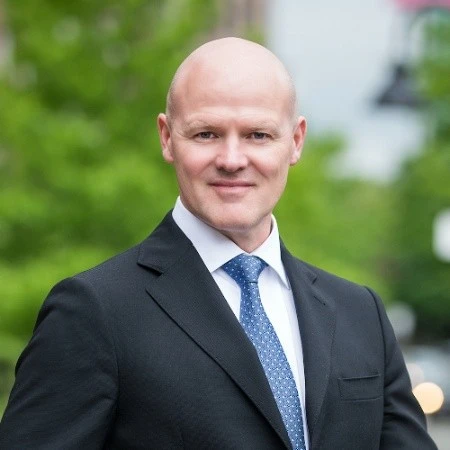
Hi, I’m Paul Krismer. I’m your happiness expert and this week’s video is all about the foundations of what is positive psychology. Perhaps, I’m way overdue to do a video on this topic since I talk about happiness and positive psychology every week, but I never really explained what it is. Sometimes it’s misconstrued as simply positive thinking and there is some science around positive thinking, but often positive thinking has this kind of pop psychology, foo-fooey, wishful thinking, magical context to it, and that’s not what positive psychology is. Now, I will make a separate video, perhaps for the week following, on positive thinking because it’s a worthwhile topic in and of itself, but it is not what positive psychology is. Positive thinking is just one component piece of positive psychology. Positive psychology is a branch of the field of psychological research generally about the human thinking, the what makes us emotionally and intellectually who we are.
Back in 1998, the father of modern day positive psychology, a guy named Martin Seligman, ran for the presidency of the American Psychological Association. And in so doing, in his acceptance speech when he won the role, he said, “We have a problem in our field. We study nothing but negative mental health pathology. We study depression, anxiety, and all the personality disorders and all these kinds of things. We focus on the negative stuff almost exclusively.” In fact, he said that we study 17 times more negative pathology than we look into what makes people thrive, what makes people flourish. And so, he put a challenge out to his colleagues in the psychology association. He said, “You know, how can we do more to have ordinary people not just be okay, but do very well, to be happy, be successful, to be accomplished, to have tremendous sense of a beauty and joy in their lives?” And that’s what positive psychology became. And so this video is going to talk a little bit more about the foundations of what this field of science is all about, and how you can lean into some of that learning yourself, so stay tuned.
As a coach, public speaker, and best-selling author, I teach topics just like this one all around the world, so stay tuned and I’ll give you practical tools that you can use to make both yourself and those around you both happier and more successful. So, if science has spent an extraordinarily large amount of time studying negative mental health, and it’s worthwhile for sure, it has spent too little time looking at just what makes us thrive. And think of it this way, it’s a construct that’s I find helpful, that if negative mental health pathology is a minus five, it’s when you’re severely depressed or disabled by your anxiety and we call that minus five, and we study a lot about that. And the science is great, it helps people move away from that negative five place of fetal position in bed, unable to do anything, and bumps them up a scale to maybe minus three or minus two. And at that point, they say, “Success, we did it. People are happy,” or at least no longer pathologically unhappy. And that is very, very valuable for a segment of the population for sure, but wouldn’t it be wonderful if we could move people towards some kind of positive place, maybe plus five, where they’re absolutely flourishing, just super buoyant and resilient, and enjoying life?
And if that were positive five, let’s study what gets people to there. And even when we study that, we can see it as a facility that if you could move people towards that end of the spectrum, when hard things come in their life that inevitably do, they don’t get all the way back down to the negative pathology place, but maybe if they were at a plus three or something, and they have a hard thing come in their life, they get to zero and they’re not disabled by negative mental health pathology. So, positive psychology is, in essence, the study of what gets us towards that positive five end of the spectrum where we’re absolutely flourishing. There were people who came before Martin Seligman who kind of coined and fathered the idea of a positive psychology subfield within the broader field of psychology. And those people, some of them, might be well known to like Abraham Maslow who studied the hierarchy of needs, basically saying we basically need our basic most simple physical needs met first, which is why we all need a certain amount of money, and then we have more important transcendent needs that go above that. And he studied this idea that there’s this ascendancy of higher psychological needs that we all want to strive to achieve.
John Kavan, one of my favorite researchers, has been studying mindfulness since the early 1970s. So, well before positive psychology came about as a subfield, but clearly he was doing very important work in this area before we called it positive psychology. And one of my favorite positive psychologists, a guy named Mikhali Cheek sent me hall, who studies flow, the being in the zone, the juicy feeling that we’re really in a great place, and he began those studies in the early 70s as well. So, it’s not like the research field of positive psychology is brand new, but it found its own foundation and its own subcategory of psychology in and around 1998 when Martin Seligman became the president of the American Psychology Association. And positive psychology has some kind of fundamental facets to it including positive thinking which, in and of itself, is not what positive psychology is. But it includes things like gratitude, forgiveness, mindfulness, the character strengths and virtues, so that the qualities we take on as an individual that are the ones that make us feel most good about ourselves and contribute broadly to the world at large. And resilience is a much a very important topic in positive psychology. And there’s a whole bunch of other interesting facets of this field that many, many, many scholars now are spending their full-time efforts studying.
And what I love about positive psychology is that it is laboratory-based, tested and true ways that we can live our most happy and successful lives. And that’s why I’m fascinated with this field and I’ve admitted my life’s mission to making the world a little bit happier through science-based interventions. And that’s it for this week. I’ll do a video on positive thinking very soon. Thanks for watching. If you like this kind of content, click the like button. It’s good for the analytics. And if you care to share happiness in the world broadly, share this video with other people. Thanks, bye for now.